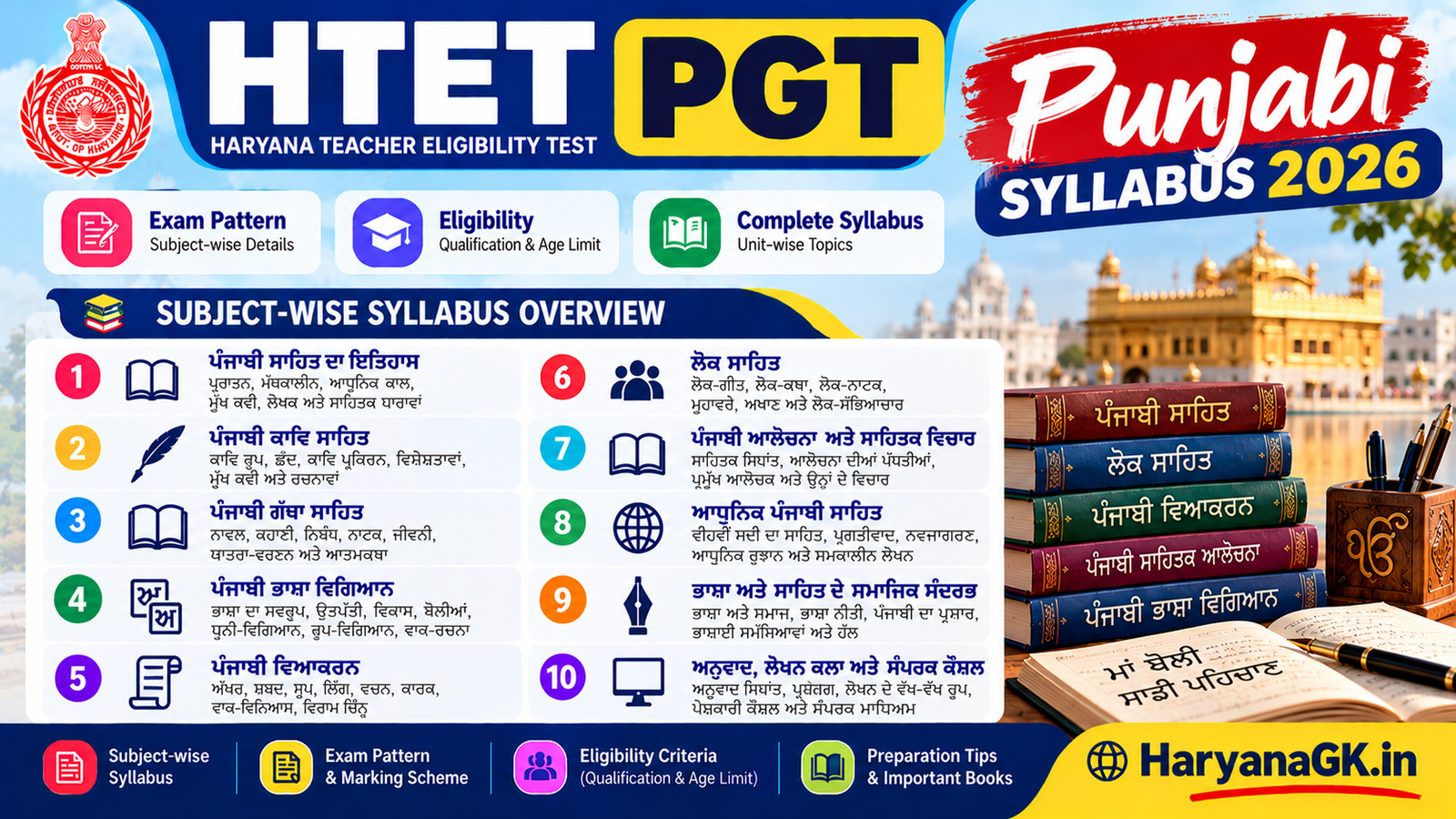
HTET PGT Punjabi Syllabus 2026 Subject-wise Syllabus, Exam Pattern and Eligibility
PGT Punjabi builds directly on the TGT-level syllabus but adds a full senior-secondary literature layer — a dedicated modern poetry anthology (ਕਾਵਿ-ਕੀਰਤੀ), a modern prose collection (ਆਧੁਨਿਕ ਗੱਦ ਰਤਨਾਕਰ), and a full-length play (ਸ਼ੋਭਾ ਸ਼ਕਤੀ) — none of which appear in the TGT Punjabi syllabus. Candidates moving up from TGT-level preparation need to treat this as additional material, not a repeat of what they already covered.
This guide covers the HTET PGT Punjabi syllabus exactly as BSEH has structured it, along with the exam weightage and the eligibility conditions for this paper.
HTET PGT Punjabi Exam Pattern and Weightage 2026
The paper has 150 multiple-choice questions for 150 marks, completed in two and a half hours, with one mark per question and no negative marking.
| Section | Number of MCQs | Marks |
|---|---|---|
| Child Development and Pedagogy | 30 | 30 |
| Languages (Hindi 15 + English 15) | 30 | 30 |
| General Studies (Quantitative Aptitude 10, Reasoning 10, Haryana GK 10) | 30 | 30 |
| Punjabi (Subject Specific) | 60 | 60 |
| Total | 150 | 150 |
Qualifying marks:
- General category candidates: 60% (90 marks)
- SC and differently-abled candidates of Haryana domicile: 55% (82 marks)
- SC and differently-abled candidates from other states: 60% (90 marks)
Topics come from the Class 9-12 syllabus prescribed by the Haryana Education Department, with the difficulty standard reaching postgraduate level.
| HTET Previous Year Exam Papers with Answer Keys | ||
| Sr. No. | Year of Exam | Download Link |
| 1 | 2024 | Download PDFs  |
| 2 | 2023 | Download PDFs |
| 3 | 2022 | Download PDFs |
| 4 | 2021 | Download PDFs |
| 5 | 2020 | Download PDFs |
| 6 | 2019 | Download PDFs |
Common Syllabus for HTET PGT (Child Development, Languages, General Studies)
These three sections are identical across every PGT subject and make up 90 of the 150 marks.
Child Development and Pedagogy
Covers the psychology of teaching and learning for the 14-17 age group, including Freud’s Psychosexual Development Theory, Erikson’s Theory of Psychosocial Development, Bandura’s Social Learning Theory, and the standard Piaget/Kohlberg/Vygotsky foundations, alongside inclusive education and assessment practices.
Languages — Hindi and English
Each carries 15 marks: one unseen passage tested for comprehension, inference, grammar and verbal ability, combined with the pedagogy of language development.
General Studies — Haryana GK, Reasoning and Quantitative Aptitude
Haryana GK (10 marks) covers state history, current affairs, geography and welfare schemes. Reasoning (10 marks) spans verbal and non-verbal types. Quantitative Aptitude (10 marks) covers number systems, percentages, interest, mensuration and data representation.
HTET PGT Punjabi: Subject-Specific Syllabus
BSEH organises this 60-mark section into three parts, each tied to specific prescribed texts.
ਭਾਗ ਪਹਿਲਾ (Part 1) — Classes IX and X
Drawing on ਸਾਹਿਤਕ ਕਿਰਨਾਂ-1 and ਸਾਹਿਤਕ ਕਿਰਨਾਂ-2 for poetry, questions cover ਵਿਸ਼ਾ-ਵਸਤੂ (subject matter), ਕੇਂਦਰੀ ਭਾਵ (central theme), ਕਾਵਿ ਕਲਪਨਾ (poetic imagination), ਕਾਵਿ ਗੁਣ (poetic quality) and ਕਾਵਿ ਸ਼ੈਲੀ (style), alongside prose questions on subject matter, key ideas, scientific perspective and prose style from the same two books.
From ਸਾਹਿਤਕ ਰੰਗ-1 and ਸਾਹਿਤਕ ਰੰਗ-2, story-based questions cover subject matter, the emotional core of the story, its purpose, the lesson it imparts, language style, and its effect on the reader. One-act plays (ਇਕਾਂਗੀਆਂ) are tested on subject matter, characterisation, purpose, dramatic style, stagecraft, and the contemporary relevance of the theme. Biographies (ਜੀਵਨੀਆਂ) are tested on the subject’s personal life, the hardships they faced, their struggle, achievements, and the direction they offered society — plus, at this level, additional angles including the psychology, rasa (mood/essence), characters, title and moral lessons within the stories.
Part 2 — Senior-Secondary Literature
This part introduces three dedicated higher-level texts not found in the TGT Punjabi syllabus:
ਕਾਵਿ-ਕੀਰਤੀ (a modern poetry anthology) — questions on the subject matter, central theme, poetic form and poetic style of the modern poems compiled in this collection.
ਆਧੁਨਿਕ ਗੱਦ ਰਤਨਾਕਰ (a modern prose collection) — questions on the subject matter, key ideas, scientific perspective and prose style of the compositions in this book.
ਸ਼ੋਭਾ ਸ਼ਕਤੀ (a play) — questions on subject matter, characterisation, purpose, dramatic style, stagecraft, and the relevance of its themes across different time periods.
ਭਾਗ ਤੀਜਾ (Part 3) — Grammar
ਵਰਣ ਭੇਦ (letter classification — ਵਰਣ, ਲਗਾ-ਮਾਤਰਾ, ਲਗਾਖਰ), ਸ਼ਬਦ ਭੇਦ (parts of speech — noun, pronoun, adjective, verb, adverb, postposition, conjunction, gender and number changes, case, tense, and sentence-part division), and ਸ਼ਬਦ ਰਚਨਾ (word formation — prefixes, suffixes, compound words).
ਵਾਕ-ਭੇਦ (sentence construction, sentence division, sentence transformation, and punctuation marks). Antonyms, synonyms and words with multiple meanings. Idioms and proverbs. Correcting an impure/incorrect paragraph (one from a poem, one from prose). Questions related to the Punjabi language and the Gurmukhi script, and questions related to Punjabi language and culture.
This part also covers ਪਿੰਗਲ (Punjabi prosody — ਵਰਣ, ਮਾਤਰਾ, ਲਘੂ, ਗੁਰੂ, ਤੁਕ and related metrical concepts), named ਛੰਦ (metres — ਦੋਹਿਰਾ, ਸੋਰਠਾ, ਕਬਿਤ, ਬੈਂਤ, ਚੌਪਈ, ਸਵੱਈਆ), ਅਲੰਕਾਰ (figures of speech — ਅਨੁਪ੍ਰਾਸ, ਉਪਮਾ, ਰੂਪਕ, ਦ੍ਰਿਸ਼ਟਾਂਤ, ਅਤਿ-ਕਥਨੀ), poetic and literary forms, and questions related to the history of Punjabi literature.
Because Part 2 introduces entirely new texts beyond what TGT Punjabi covers, and Part 3’s grammar section is noticeably more detailed (naming specific metres, figures of speech and prosody concepts not listed at TGT level), candidates should budget extra preparation time for both rather than assuming TGT-level Punjabi grammar knowledge transfers directly.
Visit bseh.org.in or htet.eapplynow.com for official Notification & Syllabus 2026
Who Is Eligible for HTET PGT Punjabi? Qualification Details
You need to satisfy all of the following:
- A Post Graduate degree in Punjabi with at least 50% marks from a recognised university, along with a B.Ed. from a recognised university.
- Matric with Hindi or Sanskrit as a subject, or Senior Secondary/Graduation/Post Graduation with Hindi as one of the subjects.
- A consistent good academic record.
What counts as “Good Academic Record”
For direct recruitment, “Good Academic Record” means averaging at least 50% marks across any three of your 10th, 12th, Graduation and Post-Graduation results — but you must separately have at least 50% marks in your Post-Graduation itself.
Relaxation for SC, BC and differently-abled candidates
Where the minimum qualifying mark is 50%, SC, BC and differently-abled candidates get a 5% relaxation, bringing it to 47.5%. Where the minimum is 45%, the relaxed figure is 42.75%, per the Supreme Court’s 2011 ruling in P.V. Indiresan vs Union of India.
A qualification detail worth checking twice
Only a B.Ed. recognised by the National Council for Teacher Education (NCTE) counts. For the B.Ed. (Special Education) route specifically, the course needs recognition from the Rehabilitation Council of India (RCI) instead.
HSSC Group D – Previous Year Solved Papers
Practice HSSC Group D previous year solved question papers, shift-wise, with instant answers and explanations after every question.
| Exam Date | Shift | Solved Paper |
|---|---|---|
| 10 November 2018 | Shift 1 | Attempt Quiz  |
| 10 November 2018 | Shift 2 | Attempt Quiz |
| 11 November 2018 | Shift 1 | Attempt Quiz |
| 11 November 2018 | Shift 2 | Attempt Quiz |
| 17 November 2018 | Shift 1 | Attempt Quiz |
| 17 November 2018 | Shift 2 | Attempt Quiz |
| 18 November 2018 | Shift 1 | Attempt Quiz |
| 21 October 2023 | Shift 1 / Morning | Attempt Quiz |
| 21 October 2023 | Shift 2 / Evening | Attempt Quiz |
| 22 October 2023 | Shift 1 / Morning | Attempt Quiz |
| 22 October 2023 | Shift 2 / Evening | Attempt Quiz |
Frequently Asked Questions
Is ਸ਼ੋਭਾ ਸ਼ਕਤੀ a separate prescribed play, or part of the ਸਾਹਿਤਕ ਰੰਗ series?
It’s a separate, standalone play introduced specifically at the PGT level — the ਸਾਹਿਤਕ ਰੰਗ books (used in Part 1) cover one-act plays from Classes IX-X, while ਸ਼ੋਭਾ ਸ਼ਕਤੀ is a distinct senior-secondary-level text.
Does PGT Punjabi grammar go deeper than TGT Punjabi grammar?
Yes, noticeably. PGT Punjabi names specific metres (ਦੋਹਿਰਾ, ਸੋਰਠਾ, ਕਬਿਤ, ਬੈਂਤ, ਚੌਪਈ, ਸਵੱਈਆ), figures of speech, and prosody concepts (ਪਿੰਗਲ) that don’t appear in the TGT Punjabi subject-specific syllabus at all.
Which prescribed books does Part 2 draw from?
Three: ਕਾਵਿ-ਕੀਰਤੀ for modern poetry, ਆਧੁਨਿਕ ਗੱਦ ਰਤਨਾਕਰ for modern prose, and ਸ਼ੋਭਾ ਸ਼ਕਤੀ for drama.
How is PGT Punjabi eligibility different from TGT Punjabi?
TGT Punjabi accepts Punjabi as an elective or Honours subject at graduation level. PGT Punjabi requires a Post Graduate degree in Punjabi specifically, with at least 50% marks, plus a B.Ed.
Given that Part 2’s three prescribed texts are entirely new material at this level, work through ਕਾਵਿ-ਕੀਰਤੀ, ਆਧੁਨਿਕ ਗੱਦ ਰਤਨਾਕਰ and ਸ਼ੋਭਾ ਸ਼ਕਤੀ directly rather than assuming your TGT-level Punjabi literature revision carries over.