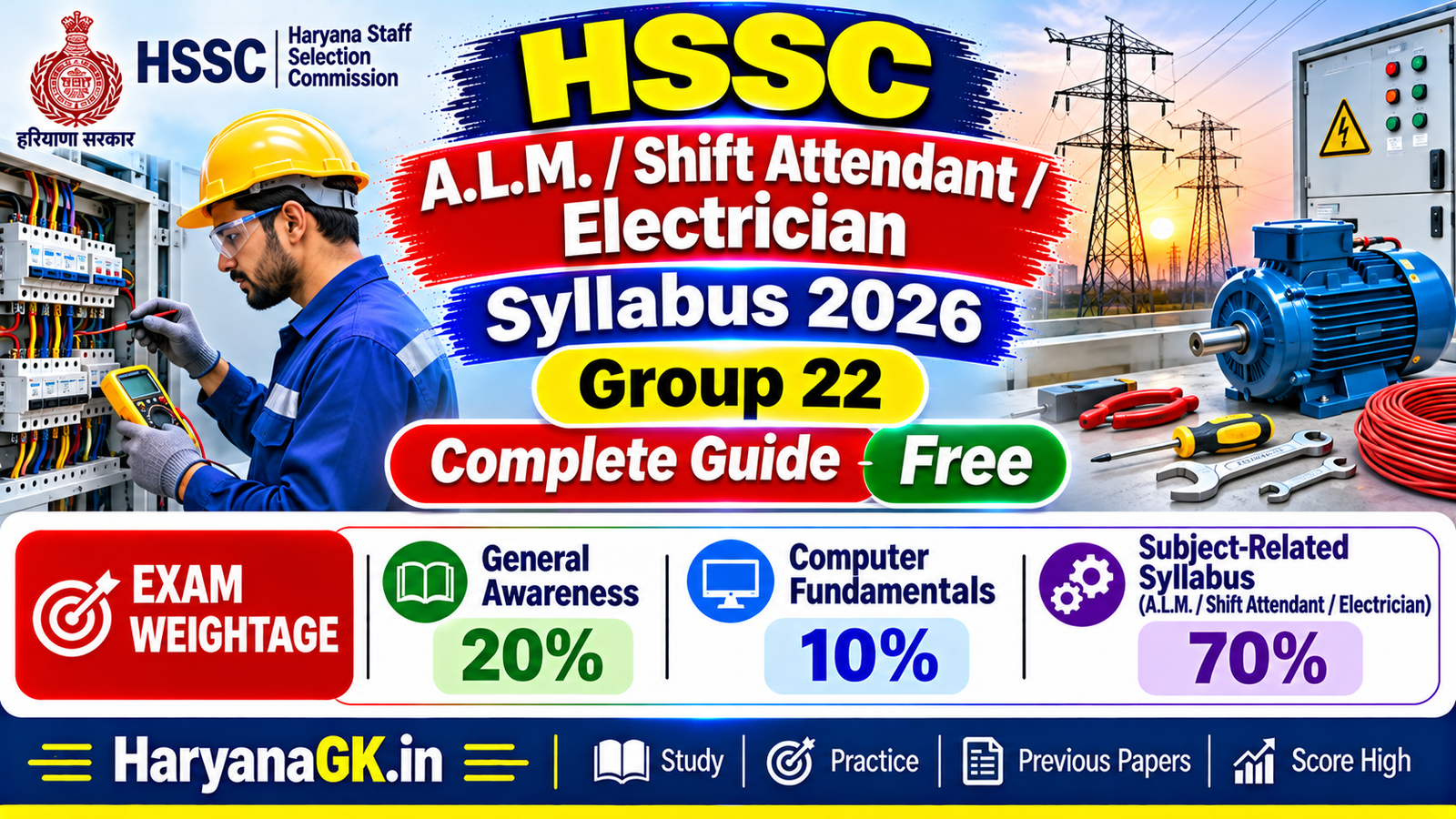
HSSC A.L.M. / Shift Attendant / Electrician Syllabus 2026
Group 22 | Subject-Wise Complete Syllabus
The following is the detailed syllabus for the HSSC A.L.M. (Assistant Lineman) / Shift Attendant / Electrician Examination 2026, organised into clearly defined sections and topic-wise headings for easy reading and preparation.
1. HSSC A.L.M. / Shift Attendant / Electrician Exam Pattern
Group 22 recruitment follows the two-stage HSSC recruitment process.
1.1 Common Eligibility Test (CET)
- Total Questions: 100
- Total Marks: 100
- Duration: Approximately 90–105 minutes.
- Subjects covered:
- General Awareness.
- Reasoning.
- Hindi.
- English.
- Quantitative Aptitude.
Clearing CET along with the applicable socio-economic criteria stage qualifies candidates for the group-specific written examination.
1.2 Written Examination Weightage
The written examination syllabus is divided into the following sections:
| Subject | Weightage |
|---|---|
| General Awareness, Reasoning, Mathematics, Science, History (including Haryana-related history), Current Affairs, Literature, Geography, Civics, Environment, Culture, etc. | 20% |
| Computer Terminology, Fundamentals, Word Software, Excel Software, PowerPoint, Internet, Web Browsing, Communication, Emails, Downloading and Uploading Data on Websites, etc. | 10% |
| Subject-Related Syllabus | 70% |
Note: HSSC mentions that the above weightage is tentative and may vary.
2. HSSC A.L.M. / Shift Attendant / Electrician Syllabus 2026 (Subject-Wise)
2.1 Safety, Tools and Workshop Practices
A. Safety and First Aid
- Safety rules and safety signs for:
- Danger.
- Warning.
- Caution.
- Personal safety messages.
- Basic injury prevention.
- Basic first aid.
- Hazard identification and avoidance.
- Personal Protective Equipment (PPE).
- Personal safety and factory safety.
- Effects of electric current on human beings.
- Reasons for electric shock.
- Disposal procedures for waste materials.
- Response to emergencies, such as:
- Power failure.
- Fire.
- System failure.
- Concept of standards and advantages of BIS/ISI.
- Familiarisation with signs and symbols of electrical accessories.
- Introduction to the 5S concept.
B. Fitting Tools and Workshop Equipment
- Introduction to fitting tools and safety precautions.
- Description, specifications and grades of:
- Files.
- Hammers.
- Chisels.
- Hacksaw frames.
- Hacksaw blades.
- Marking tools: description and uses.
- Types of drills.
- Description of drilling machines.
- Various wooden joints.
C. Measuring and Marking Tools
- Callipers.
- Dividers.
- Surface plates.
- Angle plates.
- Scribers.
- Punches.
- Surface gauges.
- Types and uses of measuring and marking tools.
- Care and maintenance of tools.
D. Sheet Metal and Carpenter’s Tools
- Description of sheet metal marking and cutting tools.
- Types of rivets and riveted joints.
- Use of thread gauges.
- Description of carpenter’s tools.
- Care and maintenance of tools.
- Trade tool specifications.
2.2 Fundamentals of Electricity and Electrical Materials
A. Fundamentals of Electricity
- Properties of conductors.
- Fundamentals of electricity.
- Electron theory.
- Free electrons.
- Fundamental electrical terms, definitions and units.
- Effects of electric current.
B. Wires and Cables
- Types of wires and cables.
- Standard Wire Gauge (SWG).
- Current-carrying capacity of different conductors.
- Specifications of wires and cables.
- Insulation and voltage grades:
- Low Voltage (LV).
- Medium Voltage (MV).
- High Voltage (HV).
- Precautions while using various types of cables and ferrules.
- Types of wire joints and their applications.
C. Electrical Materials
- Insulators.
- Semiconductors.
- Resistors.
- Voltage grading of different types of insulators.
- Permissible temperature rise.
- Solders.
- Flux.
- Soldering techniques.
- Introduction to National Electrical Code 2011.
2.3 Basic Electrical Circuits and Laws
A. Electrical Laws
- Ohm’s Law.
- Kirchhoff’s Laws.
- Laws of resistance.
B. Electrical Circuits
- Series circuits.
- Parallel circuits.
- Open circuits in series and parallel networks.
- Short circuits in series and parallel networks.
- Various types of resistors.
- Series and parallel combinations of resistors.
C. Wheatstone Bridge
- Principle of Wheatstone bridge.
- Applications of Wheatstone bridge.
- Different methods of measuring resistance values.
2.4 Magnetism and Electromagnetism
A. Magnetism
- Magnetic terms.
- Magnetic materials.
- Properties of magnets.
B. Electromagnetism
- Principles and laws of electromagnetism.
- Self-induced EMF.
- Mutually induced EMF.
C. Electrostatics
- Capacitors.
- Different types of capacitors.
- Functions and uses of capacitors.
- Grouping of capacitors.
- Inductive reactance.
- Capacitive reactance.
- Effects of inductive and capacitive reactance on AC circuits.
- Related vector concepts.
2.5 Alternating Current (AC) and Direct Current (DC)
A. AC and DC Systems
- Comparison of AC and DC systems.
- Advantages of AC and DC systems.
B. Important AC Terminology
- Frequency.
- Instantaneous value.
- RMS value.
- Average value.
- Peak factor.
- Form factor.
- Power factor.
- Impedance.
- Sine wave.
- Phase.
- Phase difference.
- Active power.
- Reactive power.
C. Single-Phase and Three-Phase Systems
- Single-phase system.
- Three-phase system.
- Advantages of AC polyphase systems.
- Problems on AC circuits.
D. Star and Delta Connections
- Concept of three-phase Star connection.
- Concept of three-phase Delta connection.
- Line voltage and phase voltage.
- Line current and phase current.
- Power in three-phase circuits.
- Balanced and unbalanced loads.
2.6 Electrical Measuring Instruments
A. Classification of Instruments
- Classification of electrical instruments.
- Essential forces required in indicating instruments.
- PMMC instruments.
- Moving Iron instruments.
B. Measurement of Electrical Parameters
Measurement using different analogue and digital instruments:
- Multimeter.
- Wattmeter.
- Energy meter.
- Phase sequence meter.
- Frequency meter.
- Other electrical measuring instruments.
C. Energy Measurement
- Measurement of energy in three-phase circuits.
- Important commonly applicable IE Rules.
- Description of MRI.
- Reading of meters through MRI.
2.7 Electrical Power System
A. Generation, Transmission and Distribution
- Generation of electrical power.
- Transmission of electrical power.
- Distribution of electrical power.
- General idea about overhead transmission.
- Distribution systems:
- Low Voltage (LV).
- Medium Voltage (MV).
- High Voltage (HV).
- Types of distribution systems.
- Accessories used in transmission and distribution.
B. Distribution Equipment
- Types of distribution systems.
- Line-protecting devices.
- Types of substations:
- Indoor substations.
- Outdoor substations.
- Pole-mounted substations.
C. Circuit Breakers and Protection
- Circuit breakers:
- Air Circuit Breaker (ACB).
- Vacuum Circuit Breaker (VCB).
- SF₆ Circuit Breaker.
- Oil Circuit Breaker (OCB).
- Protection schemes.
- Current Transformer (CT).
- Potential Transformer (PT).
- Protective relays.
- Lightning arresters.
D. Switches and Switchgear
- Different types of switches and switchgear.
- Multi-range switches.
- Rotary switches.
- Cooker control panels.
- Power circuit switches.
- Thermostats.
- Mercury switches.
2.8 Earthing and Grounding
- Importance of earthing.
- IE Rules for earthing conduits using earth clips and earth wires as per IS 732-1863.
- Plate earthing.
- Pipe earthing.
- Grid/mesh earthing.
- Earth resistance.
- Earth leakage current.
- Circuit breakers.
- Difference between grounding and earthing.
- Awareness of:
- Circuit Main Earth (CME).
- Portable earth.
2.9 Transformers, AC Motors, Starters and Alternators
A. Transformers
- Working principle of transformers.
- Construction of transformers.
- Classification of transformers.
- Single-phase transformers.
- Three-phase transformers.
- Testing of transformers.
B. Rotating Electrical Machines
- General concept of rotating electrical machines.
- Principle of operation of AC motors.
- Principle of operation of generators.
- Components of electrical machines.
- Various types of electrical machines.
C. AC Motor Starters
- Different types of starters for AC motors.
- Necessity of motor starters.
- Basic contactor circuit.
- Parts of contactors and their functions.
- Basic knowledge of soft starters.
D. Control Systems
- Different control elements and equipment.
- Symbols of control elements.
- Power and control schematic drawings with interlocks.
- Relay ladder logic.
- Relay and control panel wiring.
- Circuits of various electrical appliances and controls.
- Power distribution network drawing.
2.10 Electrical Wiring Systems and Installation
A. Types of Wiring Systems
- Introduction and explanation of electrical wiring systems.
- Cleat wiring.
- Casing-capping wiring.
- CTS wiring.
- Conduit wiring.
- Concealed wiring.
B. Electrical Wiring Rules and Standards
- IE Rules related to wiring.
- National Building Codes for house wiring.
- Specifications and types of wiring.
- Ratings and materials.
- Minimum load capacities (W/m²) of various buildings.
- Electrical load categories.
C. Electrical Load Terminology
- Maximum demand.
- Load factor.
- Diversity factor.
D. Wiring Accessories and Electrical Fittings
- Switches.
- Fuses.
- Lamp holders.
- Plugs.
- Brackets.
- Ceiling roses.
- Cut-out relays.
- Sensors.
- Voltage regulators.
- MCB.
- ELCB.
- MCCB.
E. Cable Ratings and Wiring Layout
- Grading of cables and current ratings.
- Principles of domestic wiring layout.
- Selection of switchgear.
- Voltage drop concept.
- IS 732-1863.
- Wiring materials used for PVC cables.
- Indian standards regarding:
- Clip distance.
- Fixing of screws.
- Cable bending.
F. Wiring Materials and Accessories
- Introduction to estimation procedures.
- PVC casing and capping materials.
- Sizes and grades of casing and capping.
- Conduit pipe wiring materials and accessories.
- Types and sizes of conduits.
G. Distribution of Wiring Circuits
- Branching of circuits according to loads, such as lighting and power.
- Layout of:
- Light points.
- Fan points.
- Heating loads.
- Controls of electrical loads.
- Main switches.
- Distribution boards as per IE Rules.
H. Protective Devices
Difference between:
- MCCB.
- MCB.
- ELCB.
- RCCB.
- MPCB.
I. Different Types of Wiring
- PVC conduit wiring.
- Surface wiring.
- Concealed wiring:
- PVC conduit.
- Metal conduit.
- Casing-capping wiring system.
- Power wiring.
- Control wiring.
- Communication wiring.
- Entertainment wiring.
J. Wiring Circuit Planning
- Wiring circuit planning.
- Permissible load in sub-circuits.
- Permissible load in main circuits.
2.11 Control Panel Components and Cable Forming
A. Control Panel Components
- DIN rails.
- Trunking.
- Connector blocks.
- Screw terminals.
- Relays.
- Contactors.
- Protective units.
- Fuses.
- Fuse holders:
- Chassis-mounted.
- Fuse-links.
- Resistors:
- Fixed.
- Variable.
- Capacitors.
- Switches.
- Lamps.
- Labelling.
- Grommets.
- Clips.
B. Cable Forming and Wiring Techniques
- Templates.
- Wiring schedules.
- Run-out sheets.
- Binding.
- Continuous lacing.
- Loop tie.
- Lock stitch.
- Finish knot.
- Breakouts.
- Lacing breakouts.
- Spot ties.
- Laying of wires.
- Twisted pair cables.
- Cable markers.
- Colour codes.
C. Cable Connections and Routing
- Connections and routing of cables.
- Consideration of EMI/EMC.
- Conductors of different circuits.
D. Relay Contacts and Testing
- Symbols and uses of relay contacts:
- Normally Open (NO).
- Normally Closed (NC).
- Changeover.
- Make/break after delay.
- Testing of various control elements.
- Testing of control circuits.
2.12 Batteries and Solar Cells
A. Chemical Effects of Electric Current
- Chemical effects of electric current.
- Laws of electrolysis.
- Explanation of anodes and cathodes.
B. Electrical Cells and Batteries
- Types of cells.
- Advantages and disadvantages of different cells.
- Applications of different cells.
- Lead-acid cell:
- Principle of operation.
- Components.
- Types of battery charging.
- Safety precautions.
- Test equipment.
- Battery maintenance.
- Grouping of cells for specified voltage and current.
C. Solar Cell Technology
- Principle and operation of solar cells.
- Types of solar cells.
- Solar energy fundamentals.
D. Solar Geometry and Sunlight
- Study of Sun path:
- East to west.
- North to south.
- South to north movement.
- Daily and seasonal changes of sunlight.
- Angle of inclination of radiant light.
- Relationship of light inclination with latitude and longitude of different locations on Earth.
E. Solar DC Domestic Applications
- Making of solar lanterns.
- Solar daylighting.
- Solar garden lights.
- Safety in DC systems.
- Quality standards.
- Preparation of inventory lists of equipment.
F. Solar DC Industrial Applications
- Solar street lights.
- Solar home lighting systems.
- Solar security systems.
- Solar DC water pumps.
- Difference between AC and DC solar pumps.
- PV requirements for different HP capacities.
- Solar PV e-learning software.
2.13 Units, Measurements and Basic Mathematics
A. Units and Fractions
- Units.
- Fractions.
- Classification of unit systems.
- Fundamental and derived units.
- FPS system.
- CGS system.
- MKS system.
- SI units.
- Measurement units and conversion factors.
B. Mathematical Calculations
- Highest Common Factor (HCF).
- Lowest Common Multiple (LCM).
- Applications of Pythagoras theorem.
- Related problems.
- Ratio and proportion.
- Direct proportion.
- Indirect proportion.
- Percentage.
- Conversion of percentage into decimal and fraction.
C. Mass, Weight, Volume and Density
- Mass.
- Weight.
- Volume.
- Density.
- Related numerical problems.
D. Work, Power and Energy
- Work.
- Power.
- Energy.
- Horsepower (HP).
- Indicated Horsepower (IHP).
- Brake Horsepower (BHP).
- Efficiency.
- Potential energy.
- Kinetic energy.
2.14 Heat, Temperature and Pressure
A. Fundamentals of Heat and Temperature
- Concept of heat and temperature.
- Effects of heat.
- Difference between heat and temperature.
- Boiling point.
- Melting point.
B. Temperature Scales
- Celsius scale.
- Fahrenheit scale.
- Kelvin scale.
- Conversion between temperature scales.
C. Temperature Measuring Instruments
- Temperature measuring instruments.
- Types of thermometers.
- Pyrometers.
D. Transmission of Heat
- Conduction.
- Convection.
- Radiation.
2.15 Mensuration
A. Area and Perimeter
Calculation of area and perimeter of:
- Square.
- Rectangle.
- Triangle.
- Circle.
- Semicircle.
- Circular ring.
- Sector of a circle.
B. Volume of Solids
Calculation of volume of:
- Cube.
- Cuboid.
- Cylinder.
- Sphere.
- Hollow cylinder.
2.16 Electrical Installation, Estimation and Testing
A. Installation Requirements
- Adverse conditions likely to affect an installation.
- Degree of mechanical protection necessary.
- Degree of electrical protection necessary.
- Peak and non-peak loads in office buildings.
B. Lighting Design and Estimation
- Lighting design.
- Lighting Power Density (LPD).
- Estimation of electrical load.
- Cable size estimation.
- Bill of materials.
- Cost estimation.
C. Inspection and Testing
- Inspection of wiring installations.
- Testing of wiring installations.
D. Special Wiring Installations
– Special wiring circuits for:
- Hospitals.
- Godowns.
- Tunnels.
- Workshops.
E. Electrical Safety and Cable Protection
- Danger notices as per IE Rules.
- Types of cables and their uses.
- Various cable glands.
- Introduction to IP ratings (Ingress Protection).
- IP Code format.
- Importance of bonding and grounding.
- Various types of bonding and grounding.
F. Cable Testing and Fault Detection
- Testing of cables.
- Locating cable faults.
- Open-circuit faults.
- Short-circuit faults.
- Leakage faults in cables.
2.17 Illumination and Lighting Systems
A. Laws and Principles of Illumination
- Laws of illumination.
- Types of illumination systems.
- Illumination factors.
- Intensity of light.
B. Types of Lamps
- Different types of lamps.
- Advantages and disadvantages of lamps.
- Applications of different lamps.
C. Lighting Calculations
- Calculation of lumens.
- Efficiency calculations.
D. Lighting Equipment
- Spotlights.
- Downlights.
- Strip lights.
E. Reflectors
- PAR (Parabolic Aluminized Reflector).
- MR (Multifaceted Reflector).
F. LED Video Wall
– LED video wall panel applications.
2.18 CFL/LED Lamps and DC Regulated Power Supply
A. Resistors
- Resistor colour code.
- Types of resistors.
- Characteristics of resistors.
B. Diodes
- P-N junction.
- Classification of diodes.
- Specifications of diodes.
- Biasing of diodes.
- Characteristics of diodes.
C. Rectifier Circuits
- Half-wave rectifier.
- Full-wave rectifier.
- Bridge rectifier.
- Filters.
D. Electronic Components
- Active components.
- Passive components.
- Functions of components used in CFL circuits.
- Functions of components used in LED circuits.
E. CFL and LED Lamps
- CFL lamp circuits.
- LED lamp circuits.
- Safety procedures.
- Disposal procedures.
2.19 Underground Cable Joints and Terminations
A. Underground Cables
- Need for cables.
- Advantages and disadvantages of cables.
- Various types of cables:
- PVC cables.
- XLPE cables.
- PILC cables.
- Oil-filled cables.
- Cable insulation.
- Voltage grades.
B. Cable Joints and Terminations
- Pre-moulded joints.
- Heat-shrinkable joints.
- Extrusion-moulded joints.
- Slip-on terminations.
- Cold-shrink terminations.
C. Cable Connectors and Connections
- Types of connectors used in cables.
- Current path.
- Methods of conductor connection.
- Contact resistance.
- Galvanic corrosion.
- Use of bimetals.
D. Cable Protection
- Connectivity for cable screens and armour.
- Mechanical protection.
- Kits for cable joints and terminations.
- Cable termination to equipment.
E. Standards and Testing
- Cable standards.
- Type tests.
- Routine tests.
- Field tests.
- Stress control.
2.20 Domestic Electrical Appliances
A. Working Principles and Circuits
Working principles and electrical circuits of common domestic appliances:
- Electric bell.
- Buzzer.
- Electric iron.
- Electric kettle.
- Cooking range.
- Geyser.
- Induction heater.
- Mixer.
- Grinder.
- Juicer.
- Food processor.
- Fan.
- Pump set.
- Washing machine.
- Refrigerator.
- Air conditioner.
B. Electrical Connections
- Concept of Neutral.
- Concept of Earth.
2.21 Electrical Winding and Motor Troubleshooting
A. Types of Winding
- Concentric winding.
- Distributed winding.
- Single-layer winding.
- Double-layer winding.
- Related winding terminology.
B. Motor Troubleshooting
- Troubleshooting of single-phase motors.
- Troubleshooting of AC induction motors.
- Troubleshooting of universal motors.
2.22 Estimation, Costing and Wiring Layouts
- Concepts and principles of estimation and costing.
- Different wiring layouts.
- Preparation of Bill of Materials (BOM) for:
- Domestic wiring.
- Commercial wiring.
- Industrial wiring.
- Smart wiring concept.
2.23 Wireman Permit and Competency Certificate
- Procedure for obtaining a wireman permit.
- Procedure for obtaining a competency certificate.
3. How to Prepare for the HSSC A.L.M. / Shift Attendant / Electrician Examination
- Prioritise technical subjects: The subject-related syllabus carries 70% weightage, making it the most important part of the written examination.
- Prepare electrical fundamentals: Focus on Ohm’s Law, Kirchhoff’s Laws, AC/DC circuits, magnetism, electrical measurements and electrical materials.
- Study electrical machines: Give special attention to transformers, AC motors, starters, alternators and their working principles.
- Practise wiring and installation: Understand domestic, commercial and industrial wiring, protective devices, earthing and electrical estimation.
- Cover solar technology: Study solar cells, batteries, solar pumps, solar lighting systems and their applications.
- Practise numerical problems: Focus on units, measurements, resistance, AC circuits, power, energy, efficiency and mensuration.
- Do not ignore general subjects: Prepare Haryana GK, reasoning, mathematics, science, current affairs and basic computer knowledge.
4. Frequently Asked Questions (FAQs)
Q1. What is the HSSC A.L.M. / Shift Attendant / Electrician Syllabus 2026?
The syllabus covers electrical fundamentals, electrical circuits, magnetism, measuring instruments, power systems, transformers, motors, electrical wiring, earthing, batteries, solar technology, illumination, electronic components, domestic appliances and electrical estimation, along with general awareness and computer knowledge.
Q2. What is the subject-related weightage in the HSSC Group 22 examination?
The subject-related section carries 70% weightage. General awareness and related subjects carry 20%, while computer knowledge carries 10%.
Q3. Which topics are important for the Electrician examination?
Important areas include electrical fundamentals, AC and DC circuits, transformers, motors, electrical wiring, earthing, measuring instruments, protective devices, batteries and solar technology.
Q4. Is the HSSC A.L.M. / Shift Attendant / Electrician syllabus the same every year?
HSSC may update its syllabus and examination pattern periodically. Candidates should always check the latest official syllabus and recruitment notifications before beginning their preparation.
Q5. Where can candidates download the official syllabus?
Candidates can visit the official Haryana Staff Selection Commission website:HSSC Official Examination Syllabus
5. Official Notification and Source
The syllabus content is based on the Group 22 – A.L.M. / Shift Attendant / Electrician syllabus provided for formatting. Candidates should cross-check the latest official document and amendments published by the Haryana Staff Selection Commission.
Official Website: Haryana Staff Selection Commission
Examination Syllabus: HSSC Examination Syllabus
6. Explore Other HSSC Group Syllabus Guides
Explore other HSSC examination syllabi to prepare for different Group examinations:
- HSSC Scientific Assistants / Analyst Syllabus 2026.
- HSSC V.L.D.A. Syllabus 2026.
- Other HSSC Group-wise examination syllabi.
Formatting note: The original topic coverage has been retained and organised into 23 technical sections. Spelling, abbreviations and headings have been standardised for readability. The exam-pattern details and official-source claims have not been independently verified.