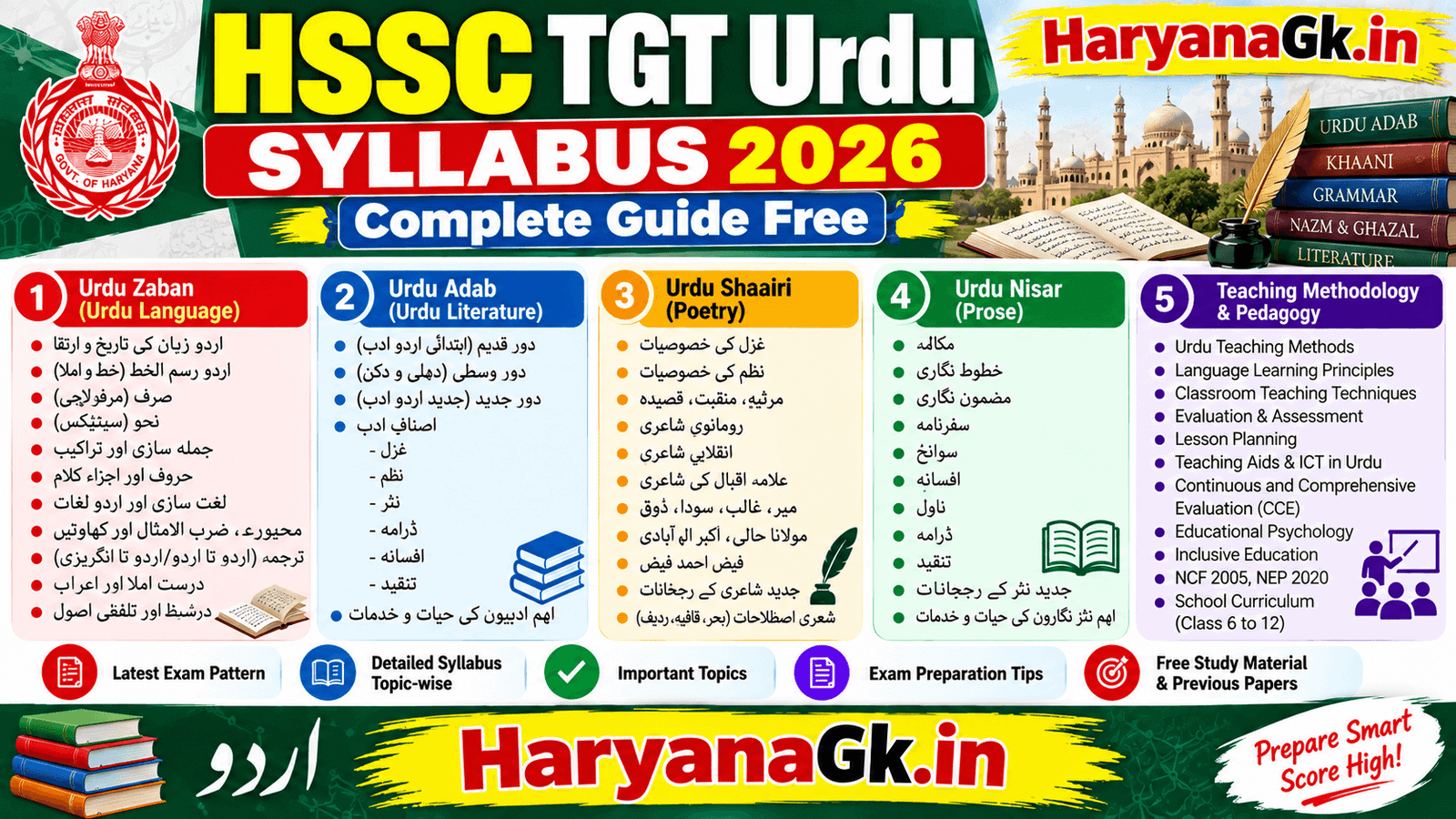
The HSSC TGT Urdu Syllabus 2026 covers recruitment for TGT Urdu posts under the Haryana Staff Selection Commission. This HSSC TGT Urdu Syllabus guide breaks down the exam pattern and the full subject-wise topic list, straight from the official syllabus published at hssc.gov.in, so you know exactly what to study before you open a single PDF.
HSSC TGT Urdu Syllabus Exam Pattern
This recruitment follows the standard two-stage HSSC process. Stage one is the Common Eligibility Test (CET) — 100 questions, 100 marks, roughly 90–105 minutes, covering general awareness, reasoning, Hindi, English and quantitative aptitude. Clearing CET plus the socio-economic criteria stage qualifies you for the group-specific written exam, which is where the HSSC TGT Urdu Syllabus below actually applies.
The HSSC TGT Urdu syllabus for the written exam splits into weighted parts:
- ENVIRONMENTAL AWARENESS — 10% weightage
- Haryana General Knowledge and Welfare schemes of the Haryana Government — 20% weightage
- Road Safety Awareness — 5% weightage
- Perspectives on Education and Leadership — 15% weightage
- URDU Language — 50% weightage
- Parts: 1. 2. 3 — 45% weightage
HSSC notes on the official document that this weightage is tentative and may vary, so treat it as a study-time guide rather than a locked question count.
HSSC TGT Urdu Syllabus 2026 (Subject-Wise)
The subject-specific block of the HSSC TGT Urdu syllabus spans the following areas. Here is the complete breakdown.
1. ENVIRONMENTAL AWARENESS
Introduction: Basics of ecology, ecosystem concept, and sustainable development; sources, advantages, and disadvantages of renewable and non-renewable energy, Rainwater harvesting, deforestation – its effects & control measures. (Weightage 10%)
Air and Noise Pollution:
Air Pollution: Source of air pollution. Effect of air pollution on human health, economy, Air pollution control methods, Noise Pollution: Source of noise pollution, Unit of noise, Effect of noise pollution, Acceptable noise level, Different methods of minimising noise pollution.
Water and Soil Pollution:
Water Pollution: Impurities in water, Cause of water pollution, Source of water pollution. Effect of water pollution on human health, Concept of DO, BOD, and COD. Prevention of water pollution- Water treatment processes, sewage treatment. Water quality standard,
Soil Pollution: Sources of soil pollution, Effects and Control of soil pollution, Types of Solid Waste – Household, Industrial, Agricultural, Biomedical, Disposal of Solid Waste, Solid Waste Management, E-waste, and E-waste Management. Impact of Energy Usage on the Environment: Global Warming, Greenhouse Effect, Depletion of Ozone Layer, Acid Rain. Eco-friendly material, recycling of material, concept of green buildings, concept of carbon credit & carbon footprint.
2. Haryana General Knowledge and Welfare schemes of the Haryana Government.
(Weightage 20%) Haryana history, current affairs, literature, geography, civics, environment, culture, etc., and welfare schemes run by the state government of Haryana and provisions there-in.
3. Road Safety Awareness
(Weightage 5%) Traffic Rules, importance of traffic rules, authority to implement traffic rules, punishment for violating traffic rules, authority to issue driving licences, procedure to get driving licences, classification of vehicles, traffic signs, knowledge of safety measures in vehicles.
4. Perspectives on Education and Leadership (Weightage 15%)
(a) Understanding the learner concept of growth, maturation and development; principles and debates of development; development tasks and challenges; domains of development: physical, cognitive, socio-emotional, moral, etc.; deviations in development and its implications; understanding adolescence: needs, challenges and implications for designing institutional support; role of primary and secondary socialisation agencies. Ensuring homeschool continuity.
(b) Understanding Teaching Learning Theoretical perspectives on Learning – Behaviourism, Cognitivism and Constructivism with special reference to their implications for: (i) The role of teacher (ii) The role of learner (iii) Nature of teacher-student relationship (iv) Choice of teaching methods (v) Classroom environment (vi) Understanding of discipline, power, etc.
Factors affecting learning and their implications for: (i) Designing classroom instructions, (ii) planning student activities and (iii) creating learning spaces in school. Planning and Organisation of Teaching-Learning; e-Perspectives in Education,
NEP-2020: Early Childhood Care and Education: The Foundation of Learning; Foundational Literacy and Numeracy; Curriculum and Pedagogy in Schools: Holistic & Integrated Learning; Equitable and Inclusive Education: Learning for All; Competency-based Learning and Education. Guiding Principles for Child Rights, Protecting and Provisioning for Rights of Children to Safe and Secure School Environment, Right of Children to Free and Compulsory Education Act, 2009, Historically studying the National Policies in Education with special reference to school education;
School Curriculum Principles: Perspective, Learning and Knowledge, Curricular Areas, School Stages Pedagogy & Assessment, (i) Concept of Syllabus and Curriculum, Overt and Hidden Curriculum (ii) Foundational Literacy and Numeracy, Early Childhood Care and Education (iii) Competency-based education, experiential learning, etc. (iv) Instructional Plans: -Year Plan, Unit Plan, Lesson Plan (v) Instructional material and resources (vi) Information and Communication Technology (ICT) for teaching-learning (vii) Assessment of learning, for learning and as learning: Meaning, purpose and considerations in planning each.
Enhancing Teaching and Learning Processes: Classroom Observation and Feedback, Reflections and Dialogues as a Means of Constructivist Teaching. (c) Creating a Conducive Learning Environment The concepts of diversity, disability and inclusion; the implications of disability as a social construct; types of disabilities – their identification and interventions; the concept of school mental health; and addressing the curative, preventive and promotive dimensions of mental health for all students and staff. Provisioning for guidance and counselling, developing school and community as learning resources. (d) School Organisation and Leadership: The leader is a reflective practitioner, team builder, initiator, coach, and mentor.
Perspectives on School Leadership: instructional, distributed, and transformative; vision building; goal setting and creating a school development plan; using school processes and forums for strengthening teaching and learning; the annual calendar; time-tabling; parent-teacher forums; school assembly; teacher development forums; using achievement data for improving teaching and learning; school self-assessment and improvement; and creating partnerships with community, industry, and other neighbouring schools and higher education institutes – forming learning communities. (e) Perspectives in Education NEP-2020: Early Childhood Care and Education: The Foundation of Learning; Foundational Literacy and Numeracy;
Curriculum and Pedagogy in Schools: Holistic & Integrated Learning; Equitable and Inclusive Education: Learning for All; Competency-based Learning and Education, Guiding Principles for Child Rights, Protecting and Provisioning for Rights of Children to Safe and Secure School Environment, Right of Children to Free and Compulsory Education Act, 2009, Historically studying the National Policies in Education with special reference to school education; School Curriculum Principles: Perspective, Learning and Knowledge, Curricular Areas, School Stages – Pedagogy & Assessment
URDU Language
(Weightage 50%) Parts: 1. 45%. 2. 15%. 3. 10%
Part One.
KNOWLEDGE OF SECONDARY AND SENIOR SECONDARY STANDARD ABOUT “URDU” SUBJECT 1- PROSE SECTION) حصہنثر (اسباق پر مبنیسوالات
- (A) – الف
- مصنفاق بالمجيد “سكونكينيند” #
- “Sukoon Ki Neend” Musannif: Iqbal Majeed.
- مصنف کنہیا لالکپور “غالب جديد شعراء کی مجلسمیں” #
- “Ghalib Jadeed Shuara Ki Majlis Me” Musannif: Kanhaiyya Lal Kapoor.
- مصنفا حمد جمال پاشا “كليما لدينا حمد کا خاكه” #
- “Kaleemuddin Ahmad Ka Khaka” Musannif: Ahmad Jamal Pasha.
- ب – ) B(
- مصنفیطر سبخاری سویرے جو کلانکه میریکھلی” #
- “Sawere Jo Kal Aankh Meri Khuli” Musannif: Patras Bukhari.
- مصنفہ عصمت چغتائی چوتھیکا جوڑا ” #
- “Chothi Ka Joda” Musannifa: Asmat Chughtai.
- ج – )C(
- مصنف منشی پریم چند “قولکا پاس” #
- “Qaul Ka Paas” Musannif: Munshi Premchand.
- مصنفر تنسنگھ کا ٹھکا گھوڑا ” #
- “Kaath Ka Ghoda” Musannif: Ratan Singh.
- مصنف حبيبتنوير “كارتوس” #
- “Kaartoos” Musannif: Habib Tanweer.
- د )D(
- مصنف میر باقر علید بلوی بہادر شاهکاباتهی ” #
- “Bahadur Shah Ka Hathi” Musannif: Meer Baqir Ali.
- مصنف فرحتکاکوری ” کہاوتونکیکهانی ” #
- “Kahawaton Ki Kahani” Musannif: Farhat Kakori.
2- POETRY SECTION) حصہ نظم ( منظومات پر مبنیسوالات
- (A) – الف
- جانثار اختر کی غزل “جبلگینز خمتوقاتلكود عاديجان” #
- “Jab Lagen Zakhm To Qatil Ko Dua Di Jae” Janisar Akhtar Ki Ghazal
- نظم طبا طبائیكینظم “گور غریباں” #
- “Gor-e-Ghareeban” Nazam Tabatabai Ki Nazm.
- فاطمہ شعر یکی نظم “یادنگر” #
- “Yaad Nagar” Fatima Shoora Ki Nazm.
- ب) B(
- خواجہ میر درد کی غزل “سماكها نتريو سعتكو باسکین و ارض” #
- “Arzo Sama Kahan Teri Wusat Ko Pasaken” Khawaja Meer Dard Ki Ghazal
- علامها قبالكينظم “شعا عاميد” #
- “Shuaa-e-Umeed” Allama Iqbal Ki Nazm.
- ج C(
- نظیر اکبر آبادی کی نظم “نیکی و ریدی” #
- “Naiki Or Badi” Nazeer Akbarabadi Ki Nazm.
- میرتقی میر کی غزل ہستیاپنی حباب کیسی ہی ” #
- “Hasti Apni Hubaab Kisi Hai” Meer Taqi Meer Ki Ghazal.
- د )D(
- تلوک چند محرو مکینظم “ہندو مسلمان” #
- “Hindu Musalman” Tilok Chand Mehroom Ki Nazm.
- اختر شیرانیکا گیت ایکدیها تیلز کیکا گیت” #
- “Ek Dehati Ladki Ka Geet” by Akhtar Sheerani.
3- قواعد Qawaid (
- فعلاورانکے کے اقسام، صفت، ضمیر، اسم #
- Ism, Zameer, Sifat, Feal, or Unke Aqsaam.
- سابق لاحقے، رموز اوقاف، سكنات و حرکات، حروف #
- Huroof, Harakaat o Sakanaat, Rumooz-e-Auqaaf, Sabiqe Lahiqe.
- مترادفا تا ور متضاد، واحد جمع، جنس، الفاظمعنى #
- Alfaz Maana, Jins, Wahid Jama, Mutaradifaat or Mutazaad.
- محاورے اور کہاوتیں #
- Muhawre or Kahawaten.
Part Two
KNOWLEDGE OF GRADUATION STANDARD ABOUT THE “URDU” SUBJECT.
- ارتقاء اور مختلفنا ولنگار اور ناولونکا تنقیدی جائزه و اردو میننا ولنگاری کا آغاز #
- ) پریم چند، مرزا با دیر سوا، ڈپٹینظیر احمد)
- Urdu Me Novelnigari Ka Aagaz o Irtiqa or Mukhtalif Novelnigar or Novelon ka Tanqeedi Jaaizah (Deputy Nazeer Ahmad, Mirza Hadi Ruswa, Prem Chand).
- ارتقاء اور مختلف فسانہا ور افسانہنگارو نکا تنقیدی مطالعه و اردو مینا فسانہ نگاری کا آغاز #
- احمد ندیم قاسمی، منٹو، راجند سنگهبیدی، پریمچند)
- Urdu Me Afsaananigari Ka Aagaaz o Irtiqa or Mukhtalif Afsaana or Afsaananigarin ka Tanqeedi Mutaala (Premchand, Rajender Singh Bedi, Manto, Ahmad Nadeem Qaasmi).
- اردو مینانشائیہنگاریکیروایت #
- رشید احمد صدیقی، پطرس بخاری، محمد حسین آزاد)
- Urdu Me Inshaiyanigari Ki Riwayat (Muhammad Hussain Azad, Patras Bukhari, Rasheed Ahmad Siddiqi)
- خودنویشتکیروایت و اردو مینسوانحنگاری #
- Urdu Me Sawaneh nigari or Khudnaweesht Ki Riwayat.
- ارتقاء و اردو زبان کا آغاز #
- Urdu Zubaan Ka Aaghaz o Irtiqa.
- اردو کے مختلف بستانونكا تنقیدی جائزه #
- Urdu Ke Mukhtalif Dabistaano Ka Tanqeedi Jaaizah.
- تعریف نثر یا صنفک اقسامو #
- Nasri Asnaaf Ke Aqsaam o Taareef.
- کا مطالعه “باغوبهار” کتاب #
- Kitaab “BAGH O BAHAAR” Ka Mutaala.
- نظم کے اصناف کی تعریف #
- Nazm Ke Asnaaf Ki Taareef.
- بيتغزل اور مقطعكي تعريف، حسن مطلع، مطلع ردیف، قافيه، شعر، مصرعه #
- Misra, Sher, Qafiya, Radeef, Matla, Husn e Matla, Bait e Ghazal or Maqta Ki Taareef.
- تلميحاور تجاہل عارفانہ صنعتو نپر مبنیسوالات، حسنتعليل، مبالغهتضاد، استعاره، تشبيه #
- Tashbeeh, Istiaara, Mubalagha, Tazaad, Husn e Taaleel, Talmeeh or Tajahul e Aarifana Sanaton Par Mabni Sawalat.
Part Three
TEACHING METHODS OF THE “URDU” SUBJECT
- اردو تدریس کی ضرورت اور اسکے مقاصد #
- Urdu Tadrees Ki Zaroorat Or Uske Maqaasid
- بهترینار د و مدرسکی خصوصیات #
- Behtreen Urdu Mudarris Ki Khusoosiyaat
- نظمونثر کے مختلف تدریسی طریقے #
- Nazm o Nasr Ke Mukhtalif Tadreesi Tareeqe.
- زبان کی چارو نمہارتون کا جائزہ اردو #
- Urdu Zubaan Ki Charon Maharaton Ka Jaaiza.
- اردو پڑھنا سکھانے کے طریقے #
- Urdu Padhna Sikhane Ke Tareeqe
- اردو لکھنا سکھانے کے طریقے #
- Urdu Likhna Sikhane Ke Tareeqe.
Important Note: The weightage as mentioned against the syllabus is tentative & may vary.
How to Prepare for the HSSC TGT Urdu Syllabus Exam
Start with the subject-specific block of the HSSC TGT Urdu Syllabus first — it carries the heaviest weightage and is where real differentiation between candidates happens, since general awareness and computer knowledge sections overlap with every other HSSC group. Work through each topic area systematically, and revisit the subject list above every week so nothing slips through before exam day.
Don’t skip the common portion either. Haryana-specific general awareness and basic computer knowledge are easy marks that candidates often under-prepare because they’re focused on the technical syllabus.
Frequently Asked Questions: HSSC TGT Urdu Syllabus
What is the HSSC TGT Urdu syllabus for TGT Urdu?
The HSSC TGT Urdu Syllabus covers the weighted sections listed above, compiled directly from the official document published by the Haryana Staff Selection Commission.
Is the HSSC TGT Urdu syllabus the same every year?
HSSC updates its syllabus documents periodically, and the weightage listed against each section is explicitly marked tentative by HSSC. Always check hssc.gov.in/examsyllabus for the latest version before you finalise your preparation.
Do I need to clear CET before attempting this exam?
Yes. HSSC recruitment follows the standard two-stage process: you first clear the Common Eligibility Test (CET), then sit for the group-specific written exam that follows the HSSC TGT Urdu Syllabus covered in this guide.
Official Notification and Source
This HSSC TGT Urdu Syllabus is compiled directly from the official TGT Urdu Syllabus published by the Haryana Staff Selection Commission. Always cross-check the latest version and any amendments against the official document before you finalise your preparation.
Download the official syllabus PDF and check current recruitment notices at hssc.gov.in/examsyllabus.
Explore Other HSSC Group Syllabus Guides
This HSSC TGT Urdu syllabus guide is part of a growing set of subject-wise syllabus posts for every HSSC group. Browse the full set on the HSSC Syllabus tag page or the Syllabus category. For the full HSSC recruitment process, CET details and exam pattern, see the Haryana HSSC guide.